Cold plunge buying guide: pods, barrels, chillers
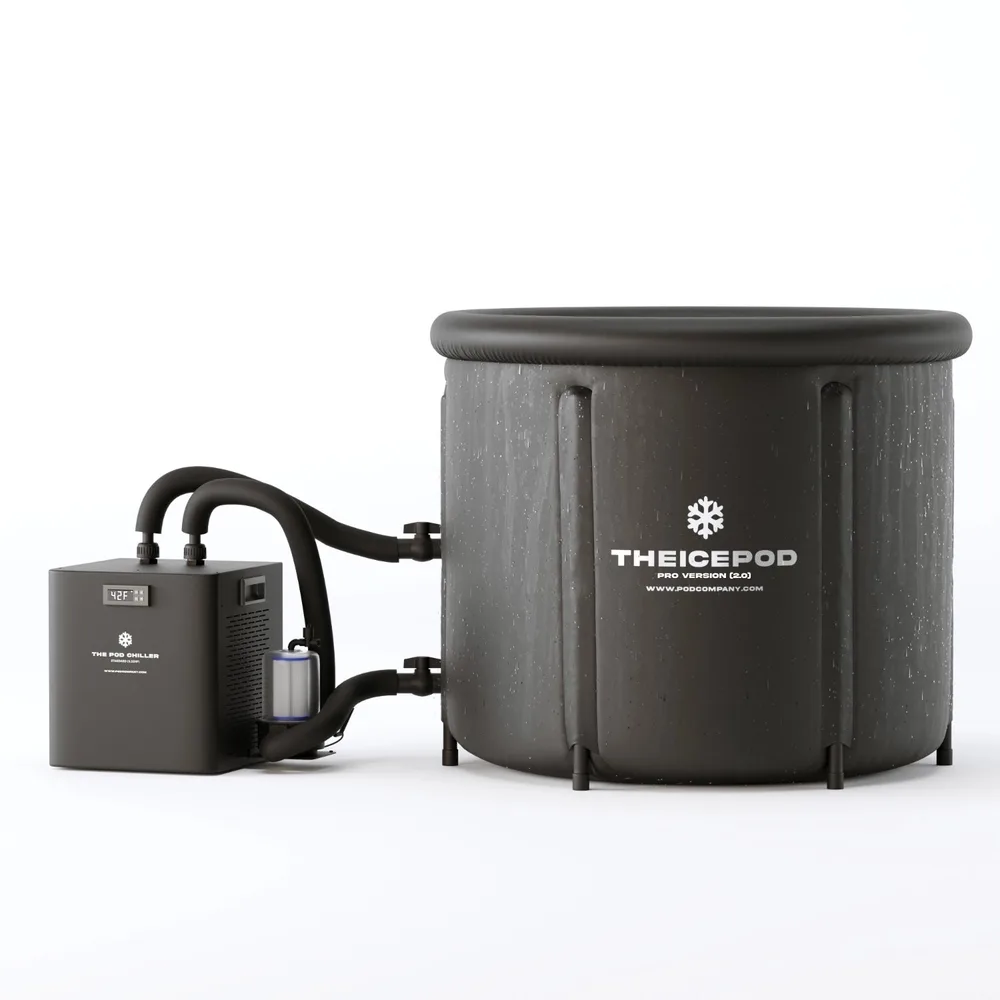
Every cold plunge tub does the same basic job, holding you and a few hundred pounds of cold water, yet the price spread across the category covers two orders of magnitude. The chaos resolves once you sort the aisle into three hardware tiers: soft inflatable pods, rigid insulated barrels, and powered chiller systems. Each tier answers the only question that matters day to day, how the water stays cold, in a different way. Get that framing straight and the individual specs sort themselves out.
The three tiers in plain terms
Soft pods are fabric-walled tubs from brands like The Pod Company and The Cold Pod, generally selling under $200. They weigh about 8 pounds empty, arrive by parcel, and set up tool-free in 5 to 15 minutes. Cooling comes from bags of ice you buy and haul yourself.
Rigid barrels hold the middle ground, with the Ice Barrel 500 as the reference model in the $1,500 to $2,000 band. These are molded shells with thick foam insulation, built-in steps, an interior seat, and threaded ports for adding a chiller. They still run on ice out of the box, but they hold cold dramatically longer than fabric.
Powered systems occupy the top tier, anchored by the Explore X1 in the $4,000 to $5,000 range. A refrigeration unit keeps the water at a set temperature around the clock, so ice never enters the picture. You can also assemble this tier yourself by pairing a ported tub with a standalone consumer chiller, which is exactly why ports matter so much in the lower tiers.
Capacity and fit come first
Typical home tubs hold 85 to 116 gallons. Round pods cluster tightly around the same footprint: The Cold Pod runs about 29.5 inches across at 85 gallons, the IcePod Pro measures 32 by 30 inches at 110 gallons, and the Explore Pro Max sits between them at 100 gallons. Every pod in that group works the same way, seated upright with knees bent, in water about 30 inches deep at most.
Barrels trade footprint for depth. The Ice Barrel 500 stands 42.1 inches tall with a molded seat and built-in steps, which puts more of you underwater at once. Owners flag the honest trade-off: the seat is comfortable, but it limits how deep and how freely taller plungers can position themselves.
Published fit numbers beat eyeballing photos. The IcePod Pro and Explore Pro Max carry ratings for users up to 6 foot 7, the Ice Barrel 500 goes to 6 foot 9, and the shorter Ice Barrel 300 tops out at 6 foot even. Inflatables publish weight ratings too; Pod Company rates its pods for roughly 280 to 320 pounds. Room for two is rare and premium, with the Explore X1’s tub marketed as spacious enough for two adults.
Insulation decides your ice bill
For any unpowered tub, insulation is the spec that shows up on your grocery receipt every week. The Ice Barrel 500 wraps R16 polyurethane foam in double walls, and reviewers measured it holding water temperature within about 3 degrees over 24 hours in 85-degree heat with the lid on. Budget pods make do with five or six fabric layers, PVC over pearl foam or cotton over nylon, which works but leans heavily on the cover and on shade.
Owner reports make the gap concrete. IcePod Pro owners describe a 30-pound bag of ice lasting about 24 hours in 100-degree direct sun, then around three days once ambient temperatures fall below 50. Cool climate, cheap pod, no problem. Hot climate, plan on either the best insulation you can afford or powered cooling.
Chiller ports, the spec that prevents a repurchase
Buying twice is the expensive mistake in this category, and ports are the insurance against it. Ice Barrel builds 3/4-inch NPT threaded ports into every barrel, so any third-party chiller connects later. The IcePod Pro ships with dual drain hoses and quick-connect valves that accept a chiller loop. A tub without either dead-ends you at the ice bag stage.
The chillers themselves cost less to run than most buyers assume. Common 1/3 horsepower consumer units cool water to about 37 to 42 degrees, and a reviewer’s Ice Barrel 500 paired with one reached 39 degrees overnight. Electricity for daily use typically lands between $10 and $30 a month, with larger premium units running $40 to $80 in hot months. At the extreme end, the Explore X1’s 1 horsepower unit pulls water just below freezing, far enough to form sheet ice, or heats it to 42 degrees Celsius in three to four hours.
Accessories, delivery, and fine print
Box contents vary more than they should. The Cold Pod includes an insulated cover, six support legs, a pump, a drain hose, and a carry bag, while some listings sell the lid or cover separately, so read the included-items line before comparing anything else. A fitted cover matters twice over, keeping debris out between sessions and holding temperature.
Weight planning is the unglamorous step people skip. A pod weighs 8 pounds empty against 104 pounds for the Ice Barrel 500, but filled weights converge: even an 85-gallon pod holds roughly 700 pounds of water, and the filled 500 sits near 900 pounds. Decks and upper floors need a load check first. If a chiller is in your future, note that residential units run on standard 110/120-volt outlets drawing about 8 to 10 amps, and garage or outdoor outlets should be GFCI protected.
Water care follows the hardware. With no filtration, plan to drain and refill every 3 to 5 days. A basic filter stretches that to 2 to 4 weeks, and a chiller with filtration and sanitation runs 1 to 3 months. Cloudy, smelly, or slimy water means change it now, whatever the calendar says.
Where to start
First-time buyers should start with a name-brand pod that has chiller-compatible valves. The outlay is small, the habit gets a fair test, and the tub survives an upgrade. Committed plungers in hot climates should look at a barrel or go straight to a powered system, because insulation and refrigeration beat daily ice runs. Households with two users, or anyone who wants set-and-forget water, belong in the chiller tier from day one. Whichever tier you pick, start with milder water, keep sessions short, and talk to your doctor first if you have a heart condition.
Questions, answered once
Do I need a chiller to start cold plunging at home?
No. An insulated tub plus bags of ice works fine, and owners in cool climates report a single 30-pound bag lasting up to three days. Just buy a tub with chiller ports or quick-connect valves so you can add powered cooling later without replacing it.
How much does a cold plunge chiller cost to run?
Most home chillers add about $10 to $30 a month in electricity with daily use. Larger or premium units can run $40 to $80 in hot months, since a 1/3 horsepower unit draws roughly 825 watts and uses 3 to 5 kilowatt-hours a day.
Can my deck hold a cold plunge tub?
Check the filled weight, not the shipping weight. Even a small 85-gallon pod holds roughly 700 pounds of water, and a filled Ice Barrel 500 sits near 900 pounds. Ground-level patios are the safe default; decks and upper floors need a load check first.
How often does cold plunge water need changing?
Every 3 to 5 days with no filtration, every 2 to 4 weeks with a basic filter, and every 1 to 3 months with a chiller running filtration and sanitation. Any cloudiness, odor, or slimy feel means drain and refill immediately regardless of schedule.