How much room a massage chair really needs
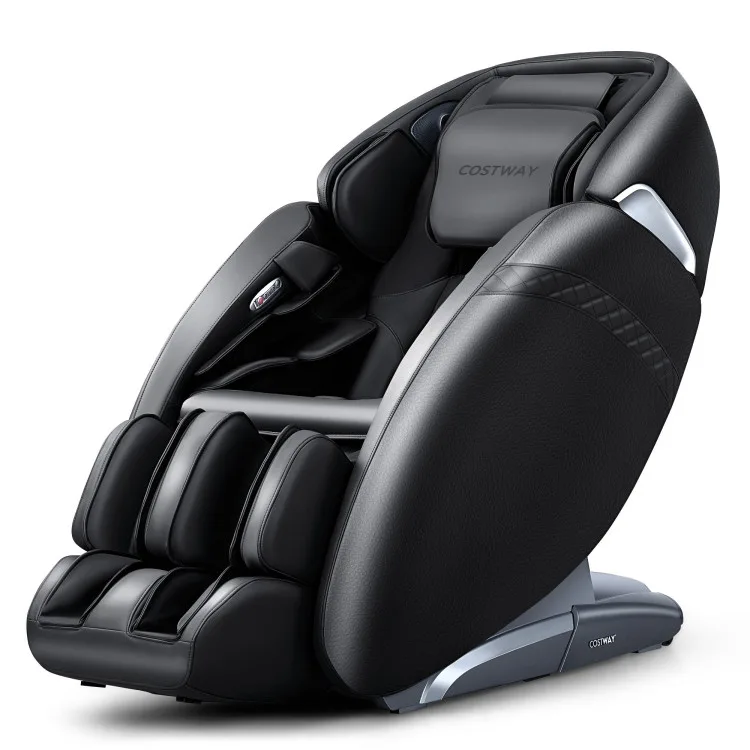
A massage chair has to fit three things: your body, your room, and every doorway between the delivery truck and the outlet. Buyers research the first, eyeball the second, and discover the third on delivery day, standing next to a crate that weighs as much as a refrigerator. The numbers below come from manufacturer spec sheets and dealer delivery pages, and they are worth ten minutes with a tape measure before you spend anything.
One chair, two footprints
Upright, a full-size massage chair claims roughly 3 feet by 5 feet of floor. Reclined, the same chair stretches to about 3 feet by 6.5 feet, and since recline is the whole point of owning one, the second figure is the real footprint. Typical envelopes run 36 to 40 inches wide and 60 to 80 inches deep at full recline, which is wider than any armchair and longer than most sofas are deep.
Tape the bigger rectangle on the floor where the chair would live and leave it there for a day. Whatever the tape blocks, the chair will block permanently, and walking around blue tape is far cheaper than walking around 250 pounds of upholstered regret.
Wall clearance splits the market
Behind-the-chair space divides designs into two camps. Space-saver chairs slide forward on their base as they recline, so they need only 2 to 6 inches from the wall; Daiwa’s designs run around 3 inches, and Costway’s budget Relaxation 09 claims 2. Traditional recliners pivot backward into the room instead and want 10 to 18 inches or more, and some premium brands skip space-saver engineering entirely, Luraco among them.
| Measurement | Space-saver design | Traditional recliner |
|---|---|---|
| Wall clearance | 2 to 6 inches | 10 to 18 inches or more |
| Wall-to-toe depth, reclined | Roughly 7 feet | 8 feet or beyond |
| Fits along one wall of a 10 x 10 room | Yes | Tight to impossible |
The traditional design loses this contest by about a foot of depth, which is often exactly the foot a bedroom does not have. If your room is generous, the distinction costs you nothing. In a small one, it decides which chairs are even on your list.
Room by room
The living room is usually the easy case. Give the chair its own wall with the full reclined rectangle clear, keep that recline lane out of the main walking path, and put an outlet within cord’s reach so nobody strings a cable across the floor. Corners look tempting but angle the recline lane into the room, so measure the diagonal before committing.
Bedrooms are where the space-saver question gets decided. A 3 by 6.5 foot lane along one wall works in a 10 by 10 room only if the door swing and closet access stay clear, and only if the chair needs 2 to 6 inches behind it rather than 18. Check the clearance line on the spec sheet before anything else.
Home offices tempt people into measuring the upright footprint, 3 by 5, and tucking the chair beside a desk. You will recline within the first hour of ownership, so plan the 6.5 foot depth from day one, plus the wall gap for whichever design you chose.
Basements and bonus rooms usually have floor space to spare. Their problem is the staircase, which brings us to the part of the floor plan nobody draws.
The delivery path is part of the floor plan
A massage chair arrives as a crate in the 300 to 350 pound range. Standard curbside delivery is usually free and leaves that crate at your driveway or entrance, with assembly on you; larger chairs typically arrive 80 to 90 percent assembled, though armrests, legrest, and panels still attach, and two people make the job sane. White glove service adds in-room placement, usually up to two flights of stairs, plus unboxing, assembly, and debris removal, most often somewhere in the $150 to $300 band, sometimes bundled free during promotions, and it books out on longer lead times with two-person crews.
Either way, measure the whole route against the boxed carton dimensions from the listing, not the assembled chair. Doorways get measured at their narrowest point with the door open against its hinges, and some flagship chairs demand a 28 inch opening. Hall turns, stair landings, and elevator interiors all need room for two people to pivot a crate, which takes more space than the crate itself.
A tape-measure checklist
- Tape out the reclined rectangle, 3 by 6.5 feet, in the exact spot the chair will live.
- Add the wall gap for your design type, 2 to 6 inches for a space-saver or 10 to 18 for a traditional recliner.
- Measure every doorway on the path at its narrowest point, hinges included.
- Check stair turns and landings for crate-pivoting room, not just crate width.
- Pull the boxed carton dimensions and shipping weight from the listing and compare against every number above.
- Confirm an outlet sits within reach of the chair without a cord crossing a walkway.
Ten minutes with a tape measure costs nothing. A restocking fee plus return freight on a 300 pound chair costs plenty, which is why the measuring happens before the order, not after the truck pulls away.
Questions, answered once
How much floor space does a massage chair need?
Plan on roughly 3 by 5 feet upright and 3 by 6.5 feet at full recline, since typical envelopes run 36 to 40 inches wide and 60 to 80 inches deep. The reclined figure is the one that matters. Tape that rectangle on your floor before you buy.
Can a massage chair sit flush against a wall?
No chair sits fully flush, but the gap varies widely by design. Space-saver chairs slide forward as they recline and need only 2 to 6 inches, while traditional recliners need 10 to 18 inches or more. The clearance figure is on every spec sheet, so check it before falling for a chair.
What should I measure before massage chair delivery day?
Measure every doorway at its narrowest point, plus hall turns, stair landings, and elevator interiors, against the boxed carton dimensions from the listing. Crates run 300 to 350 pounds, so the path matters as much as the room. Assembled dimensions tell you nothing about whether the box makes the trip.
Is white glove delivery worth it for a massage chair?
It typically costs in the $150 to $300 band and covers in-room placement up to about two flights of stairs, assembly, and debris removal. For a 300 pound crate and any staircase, that money is usually well spent. Some dealers bundle it free during promotions, so ask before paying.