What zero gravity does in a massage chair
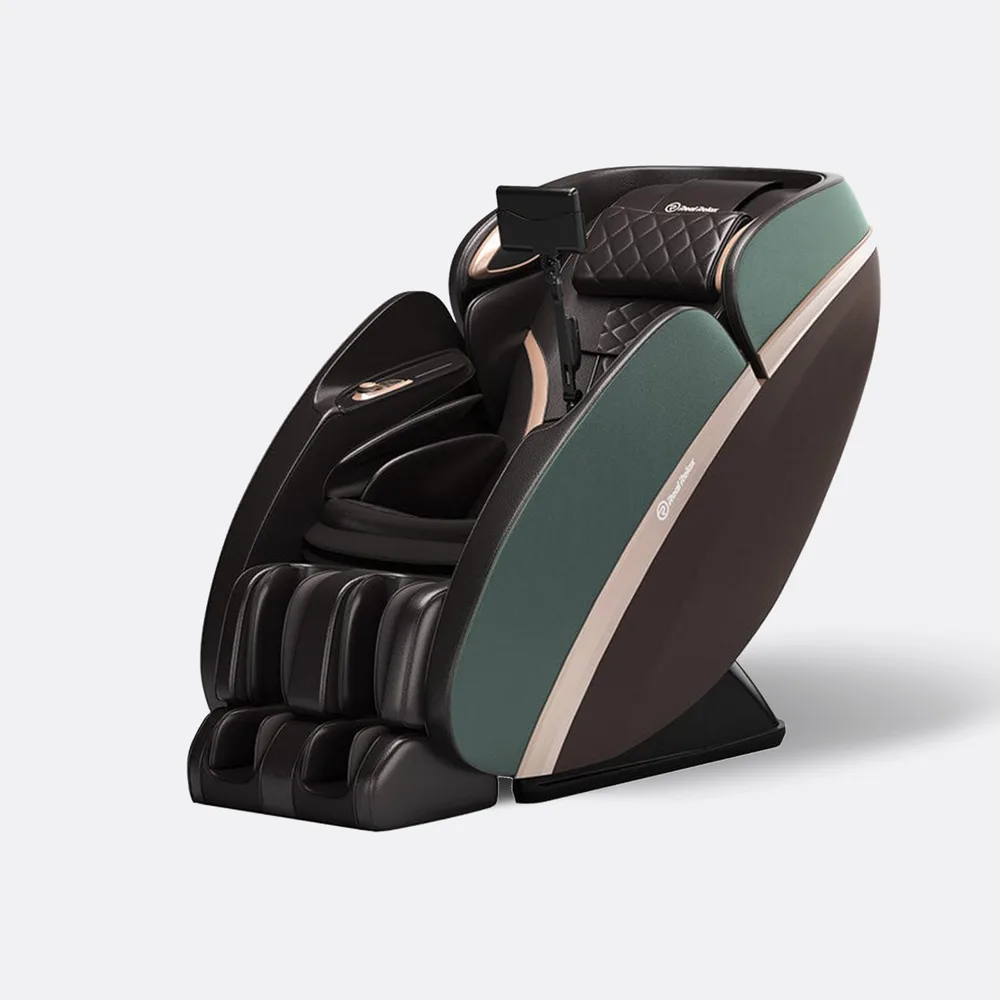
Zero gravity is the most quoted and least explained line on a massage chair spec sheet. Every brand from the budget floor to the flagship tier prints it, few say what the chair actually does, and the difference between a one-position budget recline and a three-stage system decides how the chair feels and how much room it eats. The physics is ordinary recliner geometry with a space-age name, so five minutes of plain explanation covers what most product pages dodge.
What the position actually is
A zero gravity recline tips the seat backward until your legs rise to roughly heart level or above, opening the angle between your trunk and thighs and rocking your weight off the base of your spine and onto the whole backrest. Manufacturers publish the geometry as recline angles when they publish it at all: COSTWAY lists a 129 to 157 degree range on its Relaxation 09, while MYNTA lists 134 and 120 degree figures for the MC4100.
The point, for massage purposes, is pressure distribution. Reclined this way, your body weight presses into the rollers instead of hovering over them, so the same mechanism feels deeper without working harder. Airbags get a better grip on legs and hips for the same reason. Because support spreads across more of your body, a session in the position reads as more relaxing than the same program run upright. That is a comfort effect, and we will leave the health claims to sites with looser standards.
One, two, or three positions
Spec sheets disagree on what counts. Some chairs give you a single preset angle on one button, others give staged stops, and the sheet line reads “zero gravity” either way.
| Positions | What you actually get | Examples from our research pool |
|---|---|---|
| 1 | One preset tilt, take it or leave it | Real Relax Favor-03 |
| 2 | Two staged stops, moderate and deep | Osaki OS-Champ |
| 3 | Three stops from mild tilt to full tip | Titan Pro Commander, Kahuna LM-6800T, Real Relax PS6500 |
More stops matter for two reasons. Different programs want different pressure, since a deeper tilt pushes you harder into the rollers, so a strong kneading session and a wind-down session should not share one angle. Shared chairs raise the stakes further, because the tilt that feels perfect to one person reads as too flat or too steep to another, and a single-position chair forces the compromise. For a one-user household that likes the preset, one position works fine. For everyone else, the single-stop design is the loser of this table, and the Favor-03’s one-button recline is the trade you accept for its price.
Some chairs skip the position entirely. The Human Touch WholeBody 8.0 uses two independent motors for back and legs, which lets you dial in any combination but never locks into a legs-above-heart geometry. That chair trades zero gravity for furniture looks, and it is honest about the trade.
The wall clearance catch
A deep recline has to go somewhere, and the spec that tells you where is wall clearance. Chair designs split into two camps. Space-saver frames slide forward on their base as they recline, so the backrest barely swings: the Costway Relaxation 09 needs about 2 inches of wall gap and the Real Relax PS6500 about 4. Traditional frames arc backward instead and want 10 to 18 inches, and even the budget Favor-03’s manufacturer recommends 12.
The two specs interact. Deeper zero gravity stages mean more recline travel, so a three-position chair against a bedroom wall only works if it is a space-saver design. Check reclined length too, since a tipped chair grows: the PS6500 stretches to 74 inches, and a sensible floor plan reserves about 3 by 6.5 feet for any full recline. Measure before you buy, because returning a 300 pound crate over a 4 inch clearance problem is an expensive lesson.
The spec lines worth reading
Skip the marketing paragraph and find these lines on the technical sheet.
- Number of zero gravity positions, not just the phrase. One stop and three stops both print as “zero gravity.”
- Recline angle figures. A published range beats an unexplained badge.
- Wall clearance in inches, plus whether the chair slides forward or arcs backward.
- Reclined length, checked against your actual floor space.
- Track type. A rigid L or SL track fixes the seat-to-backrest geometry and never reclines fully flat, which caps how far the position can go. Flat recline belongs to S-track chairs and the hybrid split tracks in the premium tier.
If a chair publishes none of this, treat the zero gravity badge as decoration. The brands with real geometry print the numbers.
Questions, answered once
Does zero gravity mean the massage chair reclines completely flat?
No. Most zero gravity chairs stop well short of horizontal, and rigid L or SL tracks cannot reach flat at all because the rail fixes the seat-to-backrest angle. Fully flat recline lives in S-track chairs and the premium hybrid track designs.
How much wall clearance does a zero gravity massage chair need?
It depends on the frame. Space-saver designs slide forward as they recline and need roughly 2 to 6 inches, while traditional frames arc backward and want 10 to 18 inches. Check the published figure against your room before ordering.
Is one zero gravity position enough?
For a single user who likes the preset angle, yes. Multiple positions earn their keep when several people share the chair, or when you want lighter roller pressure for some programs and deeper pressure for others, since a steeper tilt presses you harder into the rollers.
Why do zero gravity chairs raise your legs above your heart?
The geometry shifts weight off the seat and lower spine and spreads it across the backrest. Rollers and airbags then work against your full body weight, which makes the same massage feel deeper and the position feel more supported. It is a comfort and pressure-distribution effect, not a treatment.