OS-Champ vs MC4100: the safe bet and the gamble
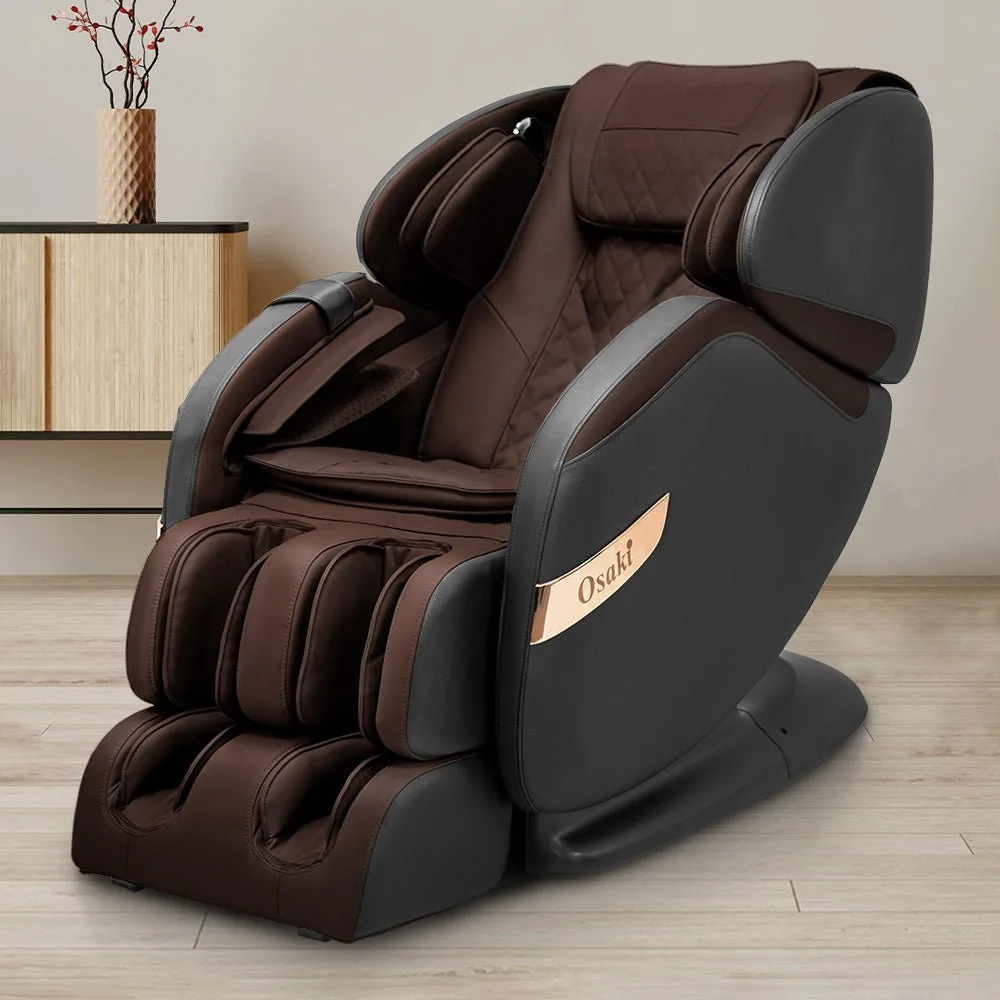
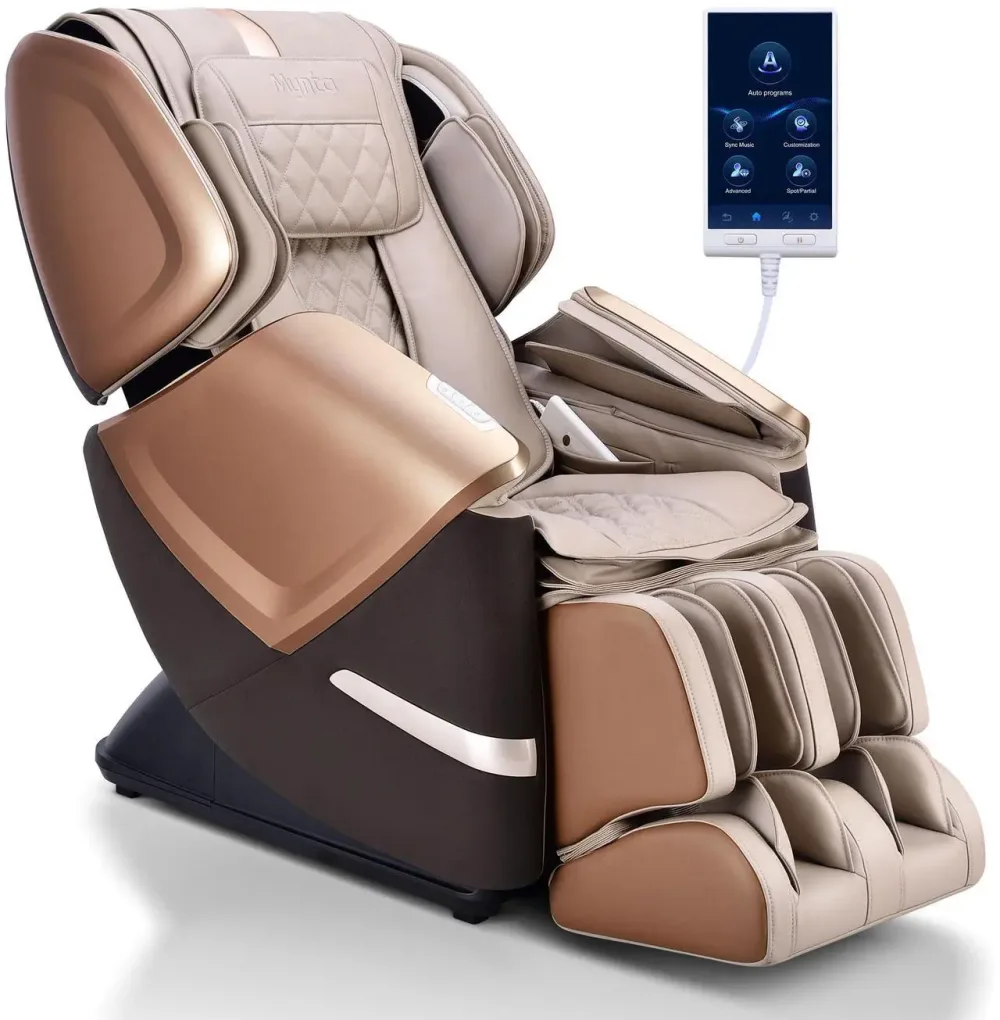
Photos: Osaki and MYNTA.
Street pricing puts the Osaki OS-Champ and the MYNTA MC4100 close enough that shoppers cross-shop them constantly, and the two chairs spend that money in opposite ways. Osaki hands you thin hardware attached to a real company: a known brand, a US dealer network, and a warranty that states its labor term out loud. MYNTA hands you a spec sheet the Champ cannot touch, a dual roller mechanism, a 52 inch track, shawl heat, twelve programs, then asks you to trust a young brand with a shallow review record and warranty fine print that confirms parts and goes silent on labor. One is the safe pick, the other is the loaded gamble, and which one loses depends on who is sitting down.
The sheets side by side
| Spec | Osaki OS-Champ | MYNTA MC4100 |
|---|---|---|
| Track | 49 in L-track | 52 in extended SL-track, neck to thighs |
| Rollers | Quad 2D, fixed depth | 4D-branded back unit plus separate 2D glute and thigh unit |
| Zero gravity | 2 stages | Recline at 134 and 120 degrees |
| Heat | Lumbar pads | Waist plus shoulder shawl |
| Airbags | 18 | 32 points |
| Auto programs | 5 | 12, with 13 techniques |
| Weight cap | 220 lb | 200 lb |
| Height range | 5 ft 0 in to 6 ft 0 in | Unpublished |
| Assembly | Typical partial assembly | Ships fully assembled |
| Warranty | 3 yr limited, labor in yr 1 | 3 yr parts, labor terms unconfirmed |
On paper this is a blowout. The MC4100 wins nearly every row, which is exactly why the rows it loses deserve the attention.
What the gamble buys you
The dual mechanism is the MC4100’s real story. Most chairs at this money run one roller carriage for the entire track, while MYNTA mounts a 4D-branded unit for the back and a separate 2D unit for the glutes and thighs, so both zones work at the same time. That layout has no direct rival at the price. Take the 4D badge with salt, though. No industry standard defines the term, and plenty of chairs wearing it are variable-speed machines by any honest reading. The dual layout is the substance; the D-number is the sticker. The rest of the sheet holds up too: a 52 inch track reaching the thighs, waist heat plus a shoulder shawl, 32 airbag points, twelve programs, and a chair that ships fully assembled, so delivery day involves a dolly instead of an afternoon with an allen wrench. Owners do flag the rollers as aggressive, with a pillow behind the back as the standing workaround, and the Music Rhythm Mode lands closer to gimmick than feature.
What the safe pick buys you
The Champ’s sheet is short and it knows it. You get a 49 inch L-track with quad 2D rollers, two-stage zero gravity, lumbar heat, 18 airbags, five programs, and an auto body scan. What you are really paying for sits outside the chair. Osaki runs an established US dealer network, and the warranty reads three years limited with parts and labor covered in year one, parts alone after. MYNTA’s three years covers parts, with labor unconfirmed, and an unconfirmed labor term on a 200-plus pound appliance means you could be hiring a technician or freighting a crate if something fails in month eight. The Champ also carries a 220 pound cap and a published fit range, while the MC4100 caps at 200 pounds, lowest among its direct competitors, and publishes no height range at all. Osaki’s entry chair has real flaws of its own, rough foot rollers above all, but nothing about it is unknown.
The loser, buyer by buyer
Weigh near 200 pounds, or share the chair with someone who does? The MYNTA loses outright. Exceeding a weight cap strains the frame and track and can void the warranty, and the MC4100’s cap leaves almost no headroom for an average American man. The Champ’s 220 gives a 180 pound user real margin.
Want the machine to still be someone’s problem in year two? The MYNTA loses again. Confirmed first-year labor from a dealer-network brand beats unconfirmed labor from a young import label every time a motor fails.
Light, average height, feature-hungry, and comfortable with import risk? Now the Champ loses. Half the airbags, fewer than half the programs, no dedicated glute mechanism, lumbar-only heat, and an assembly job the MYNTA skips. A 150 pound buyer chasing the most massage per dollar gets clearly more chair from the MC4100.
Over six feet? Both lose. The Champ’s envelope stops at six feet, and MYNTA publishes nothing, which is worse. Taller buyers should shop chairs with explicit tall ratings instead of gambling on either.
Most shoppers weigh more than they think and keep chairs longer than they plan, so the safe pick earns the default recommendation here.
The gamble is rational, and for a lighter buyer chasing the longest feature list per dollar it is the better chair. Take it knowing the cap.
Questions, answered once
Is the MYNTA MC4100 really a 4D massage chair?
The back mechanism carries 4D branding, but no industry standard defines the term and many 4D-labeled chairs are variable-speed machines. The separate glute and thigh unit is plain 2D. Judge the dual-mechanism layout, which is genuinely unusual at this price, rather than the number.
Which chair handles bigger users, the OS-Champ or the MC4100?
The Champ is rated to 220 pounds and the MC4100 to 200, the lowest cap in this class. Neither suits genuinely big users, and exceeding a cap can void the warranty. Buyers past 220 pounds should look at higher-rated chairs entirely.
How do the two warranties compare?
Osaki states three years limited with parts and labor in year one, then parts only. MYNTA states three years on parts, and we could not confirm any labor coverage. Until MYNTA publishes labor terms, the Champ holds the clear service advantage.
Does the MC4100's Music Rhythm Mode matter?
It syncs massage movement to music through the chair's built-in speakers. Reviewers treat it as a novelty rather than a reason to buy. Weigh the dual mechanism and track length instead, since those shape every session.