Which home sauna actually fits your house
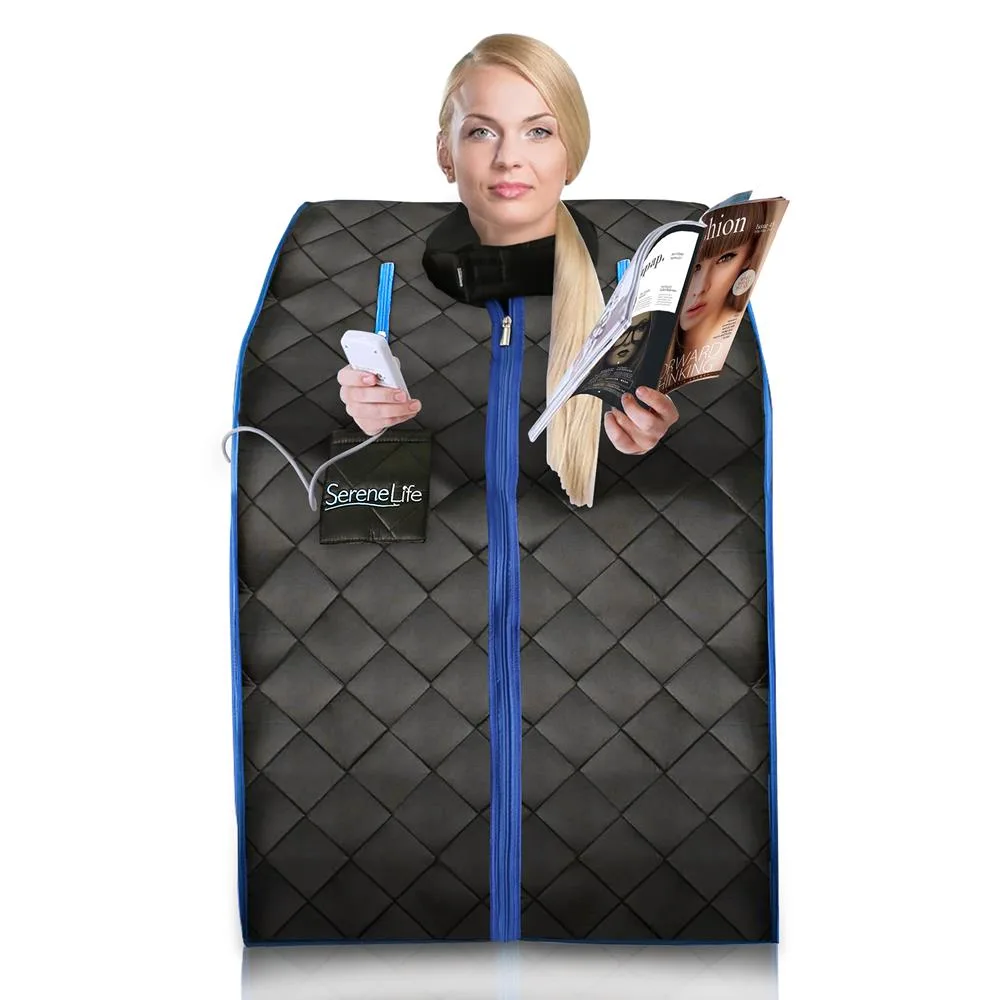
A home sauna can cost as little as a decent pair of running shoes or as much as a used car, and the gap between those purchases comes down to heat, wiring, and how many hundred pounds of freight you are willing to move. The market keeps growing either way, with North American sauna sales reaching about $267.8 million in 2025 and infrared units the fastest-growing slice, so the options multiply every year. This guide sorts the four main types, blankets, portable tents, infrared cabins, and traditional barrel kits, by what each one actually demands from your house, your electrical panel, and your patience.
The four types, and what each one demands
| Type | Heat | Power | Footprint and effort |
|---|---|---|---|
| Sauna blanket | Up to 175 F, 9 levels on the HigherDOSE | 350-420W, any household outlet | Rolls up between uses, about 20 lbs |
| Portable sit-in tent | Up to 140 F | Standard 120V outlet | Folds flat, stores under a bed |
| Infrared cabin | 118-132 F ideal, 140 F max | 120V/15A plug-and-play, dedicated outlet recommended | Roughly a 3-foot square of indoor floor |
| Traditional barrel | 150-195 F | 240V dedicated 30-50A circuit, hardwired | Outdoor pad or slab, freight delivery |
Price bands track that order. Sit-in tents open the category around the $200 mark, premium blankets occupy the $500 to $700 band, factory-direct infrared cabins land in the $2,000 to $3,000 range, and cedar barrel kits list anywhere from the mid $3,000s to $6,500 depending on size and sales. Hold those bands loosely, because the rest of this guide covers the costs the price tag hides.
Heat is the difference you will feel first
Infrared cabins warm you with carbon panels rather than heated air, and they run far cooler than most buyers expect. Golden Designs specifies 118 to 132 degrees as the ideal range for its Dynamic cabins with a 140-degree maximum, and 120 to 140 degrees is typical across the infrared class. Traditional Finnish-style saunas run 150 to 195 degrees, so the two experiences relate the way a warm bath relates to a hot one. Only a stone heater gives you the wet option as well. A barrel like the ALEKO Liatris carries a UL-certified 4.5 kW Harvia heater topped with 35 pounds of stones, and ladling water over those stones for steam is the classic session no infrared panel can reproduce. Blankets split the difference in an odd way, since the HigherDOSE claims up to 175 degrees across 9 levels, but the heat wraps you like a sleeping bag instead of filling a room.
Check your electrical panel before your budget
The wiring question decides more purchases than the price tag does. Every sauna heater should sit on its own dedicated circuit with nothing else sharing the breaker, whatever the voltage. From there the paths split. Most 1-2 person infrared cabins are 120V/15A plug-and-play, so no electrician is involved, though manufacturers recommend that dedicated outlet. Traditional electric heaters run 3 to 9 kW and typically need a hardwired 240-volt circuit on a 30-to-50-amp breaker, which means an electrician visit that belongs in the budget before you order, not after the crate lands. At the easy end, sauna blankets pull just 350 to 420 watts and fabric tents run on any standard outlet, so both sidestep the question entirely.
Delivery day is part of the price
Cabin and barrel saunas ship as curbside freight, which means the carrier drops a pallet at the street and leaves. Golden Designs infrared cabins ship at 300 to 330 pounds, and ALEKO’s 4-person barrel weighs 880 pounds, so recruit helpers before you click buy. Assembly effort splits just as sharply. The clasp-together infrared cabins go up in roughly an hour on any indoor surface, carpet included, while owners report barrel kits taking 10 to 12 hours for two people, plus site prep for a level pad that can carry the weight. Blankets and tents skip all of this and arrive by regular parcel.
Upkeep, warranties, and the long game
Wood cabins want low-chemical care: a towel on the bench every session, diluted white vinegar at about one part to four parts water instead of bleach, and light sanding with 120-grit paper for stubborn bench stains. Stone heaters add a consumable, because sauna stones need replacing roughly every one to two years under heavy use, or every three to five with regular use. A blanket’s waterproof polyurethane interior wipes clean after each session, while fabric tents need regular wipe-downs to stay fresh. Warranties run backwards from what the prices suggest. The barrel kits, blankets, and tents in this category carry 1-year limited coverage, while Golden Designs’ mid-priced infrared cabins carry 5-year limited warranties per dealer listings. Spending the most does not buy the longest paper.
Where to start
Match the sauna to the house, not the other way around. Renters and anyone testing the habit should start with a tent or a blanket, since both run on any outlet and store away between sessions. Homeowners who want a regular indoor session without an electrician are the infrared cabin’s whole audience, and the 120V models assemble in an afternoon. Buy the barrel only if you want true Finnish-style heat with steam, have outdoor space with a slab, and can budget the electrician plus an assembly weekend on top of the purchase. Whichever way you go, ease in with short sessions at moderate settings while you learn the unit, and anyone with a heart condition should talk to their doctor before making sauna time a routine.
Questions, answered once
Do I need an electrician to install a home sauna?
Not for most infrared gear. Blankets and tents run on any standard outlet, and 1-2 person infrared cabins are 120V/15A plug-and-play, though makers recommend a dedicated outlet. Traditional stone heaters are the exception, since they need a hardwired 240-volt circuit on a 30-to-50-amp breaker.
How hot does each type of home sauna get?
Infrared cabins run 120 to 140 degrees Fahrenheit, blankets claim up to 175 degrees wrapped around you, and traditional Finnish-style saunas run 150 to 195 degrees. That temperature gap is the biggest difference in how sessions feel.
What does curbside freight delivery actually mean?
The carrier drops the pallet at your curb and leaves. Moving 300-plus pounds of cabin panels, or an 880-pound barrel kit, from the street to the install spot is your job, so line up helpers before delivery day.
Which sauna type is the least work to own?
A sauna blanket. It plugs into any outlet, wipes clean after sessions, and rolls up between uses. Barrel saunas sit at the other end, with multi-hour assembly, periodic stone replacement, and ongoing wood care.