The MitoMAX 2.0 puts its real numbers on the table
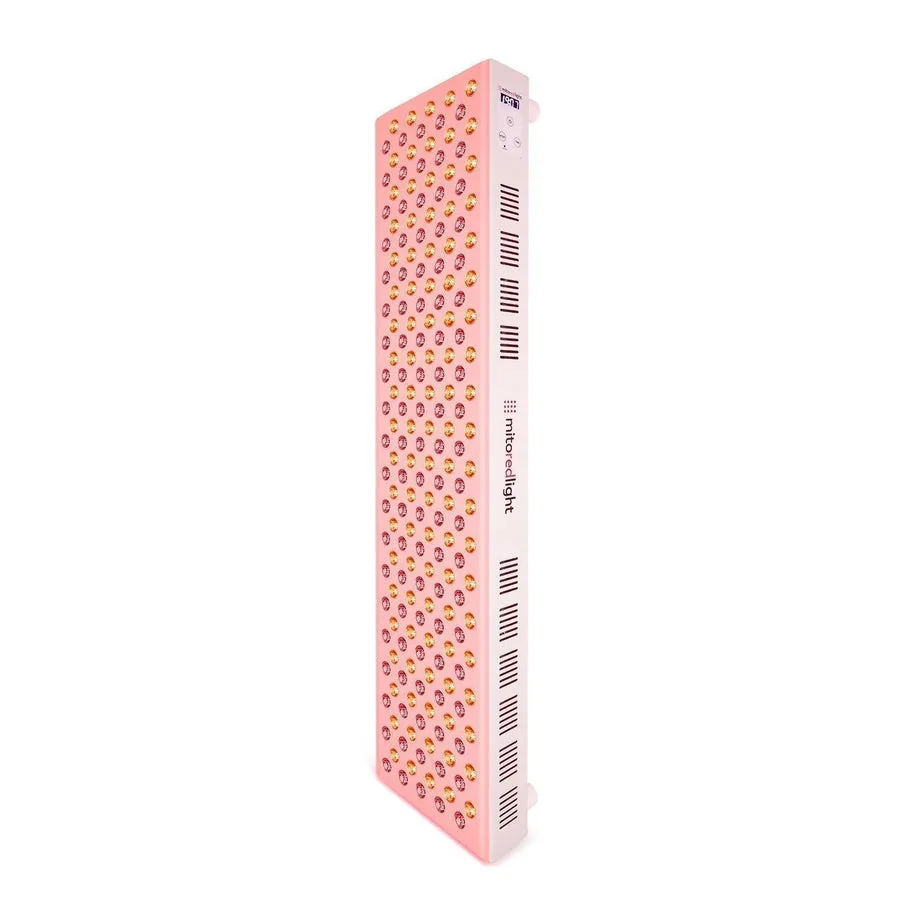
Mito Red Light’s MitoMAX 2.0 is the tall panel in the company’s Original 2.0 lineup, a 36-inch tower packing 200 LEDs split evenly between 660nm red and 850nm near-infrared. At list it lands in the $700 to $800 range, three to four times what the compact panels that dominate the category ask. The reason it deserves a close look is a rare act of spec-sheet honesty: Mito publishes two different irradiance figures for this one panel, one flattering and one modest, and tells you which meter produced each.
What you are actually buying
The MitoMAX 2.0 measures 36 by 9 by 3 inches and weighs 20 pounds, so it hangs on a door or wall mount, or rides a stand, rather than sitting on a desk. The 200 LEDs follow the category’s standard recipe, a 50/50 split between 660nm red and 850nm near-infrared, the same pairing Hooga, Bestqool, and most Amazon brands use. A built-in timer runs three modes: red only, near-infrared only, or both together, so you can run one wavelength without the other. Two fans switch on automatically and stay quiet, and Mito claims a 50,000-plus-hour LED lifespan. The spec sheet lists ETL certification, FCC compliance, FDA registration as a device, and a low-EMF designation. Smaller siblings, the MitoMIN and MitoMID, share the same design in shorter frames if the tower is more panel than you need.
Where it earns the premium
Start with the number everyone argues about. Irradiance is the most distorted spec in this category, mostly because of measurement methodology. Mito publishes both a consumer-meter reading, above 155 mW/cm2 at 6 inches, and a lab-grade reading, above 70 mW/cm2 at the same distance, for this same panel. That gap says less about Mito than about the industry’s measurement mess, put on display for once. Independent instrumented reviews routinely come in under marketing claims, as when Light Therapy Insiders measured roughly 55 mW/cm2 from a Hooga HG300 against its claimed 73. Some rivals also quote figures at 3 inches instead of the more common 6, which inflates the number further. A maker that shows you both readings, and cites independent third-party output testing on top of that, has earned some trust before you plug the thing in.
The second argument is coverage. A 36-inch LED array reaches most of a torso or back in a single position, where a compact panel forces you to reposition or settle for a smaller lit area. Owners in retailer and blog write-ups describe the panel as easy to live with, pointing to the near-silent automatic fans, the straightforward three-mode control, and a sturdy build that has held up through daily sessions over the long haul.
Where it falls short
Twenty pounds is real weight. You need a solid hanging point, a door that can take a hanging kit, or a proper stand, and none of those decisions are as casual as propping a 5-pound compact panel on its kickstand. The price multiple is the bigger hurdle. Compact 60-LED panels from Hooga and Bestqool list under $200, and if your goal is lighting a face or a shoulder from a desk, they do that job at a fraction of the cost. The vertical form factor works against desktop spot use too; this is a stand-in-front-of-it panel, full stop.
The warranty is fine rather than generous. Mito covers the MitoMAX 2.0 for 2 years, matching Bestqool, but Hooga backs its panels for 3 years and adds a 60-day trial. On a purchase this size, the longer coverage elsewhere is worth weighing.
One quirk to expect on day one: 850nm near-infrared is invisible to the eye, so in NIR-only mode half the panel looks dead. That is the design working, not a defect. The red channel, meanwhile, is genuinely bright, so keep eye protection in the routine even though staring at the array is nobody’s plan.
Who it fits
Buy the MitoMAX 2.0 if you want torso-scale coverage in one position, you have a door or wall spot that can hold 20 pounds, and you would rather pay for a maker that publishes its unflattering lab measurement next to its marketing number. It also suits anyone who wants independent control of the red and near-infrared channels rather than an all-or-nothing switch.
Skip it if a desktop panel covers your use, if the compact budget tier fits your wallet better, or if warranty length is your deciding factor, since Hooga offers a longer one for less money. And if you are new to the category entirely, a compact panel is a cheaper way to find out whether you will actually stand in front of a light every day before committing tower money.
The spec sheet
| Wavelengths | 660nm red / 850nm near-infrared in a 50/50 LED split |
|---|---|
| LEDs | 200 |
| Irradiance at 6 in | >155 mW/cm2 on a consumer meter; >70 mW/cm2 lab-grade (both published by Mito) |
| Size / weight | 36 x 9 x 3 in, 20 lbs |
| Modes / timer | Built-in timer; three modes: red only, NIR only, or both |
| Cooling | Two auto-activating quiet fans; 50,000+ hour LED lifespan |
| Certifications | ETL listed, FCC compliant, FDA-registered device, low EMF |
| Warranty | 2 years (per mitoredlight.com spec table) |
- Publishes both consumer-meter and lab-grade irradiance figures
- 36-inch array covers most of a torso or back in one position
- Maker cites independent third-party output testing
- Auto cooling fans stay near silent in owner reports
- 20 lb tower needs a sturdy hanging point or a stand
- Costs three to four times more than compact rivals
- Vertical frame is a poor fit for desktop spot use
- 2-year warranty trails Hooga's 3 years plus 60-day trial
Honest numbers, premium price
The MitoMAX 2.0 is the rare panel whose maker shows you the unflattering lab measurement next to the marketing number, and the hardware backs the candor: 200 LEDs, torso-scale coverage, quiet automatic fans, and independent red and NIR modes. Buy it if you want full-front coverage in one position and have somewhere to hang 20 pounds. Skip it if a compact desktop panel covers your use, or if warranty length matters most, since Hooga offers 3 years and a 60-day trial against Mito's 2 years.
Mito Red Light questions, answered once
Why does Mito publish two irradiance numbers for the MitoMAX 2.0?
Consumer light meters read far higher than lab-grade equipment. Mito lists both figures for this panel, above 155 mW/cm2 on a consumer meter and above 70 mW/cm2 lab-grade, each at 6 inches. Most brands publish only the flattering one.
How do you mount a 20-pound panel like this?
The 36-inch vertical frame hangs from a door or wall mount or rides a floor stand, and whatever holds it needs to handle 20 pounds. It is not built to sit on a desk the way 5-pound compact panels do.
Is there a smaller version of the MitoMAX 2.0?
Yes. The Original 2.0 series includes the MitoMIN and MitoMID, which use the same design in shorter frames at lower prices. They trade coverage area for easier placement.
What certifications does the MitoMAX 2.0 carry?
Mito's spec sheet lists ETL certification, FCC compliance, FDA registration as a device, and a low-EMF designation. The panel carries a 2-year warranty.