How to read irradiance claims on red light panels
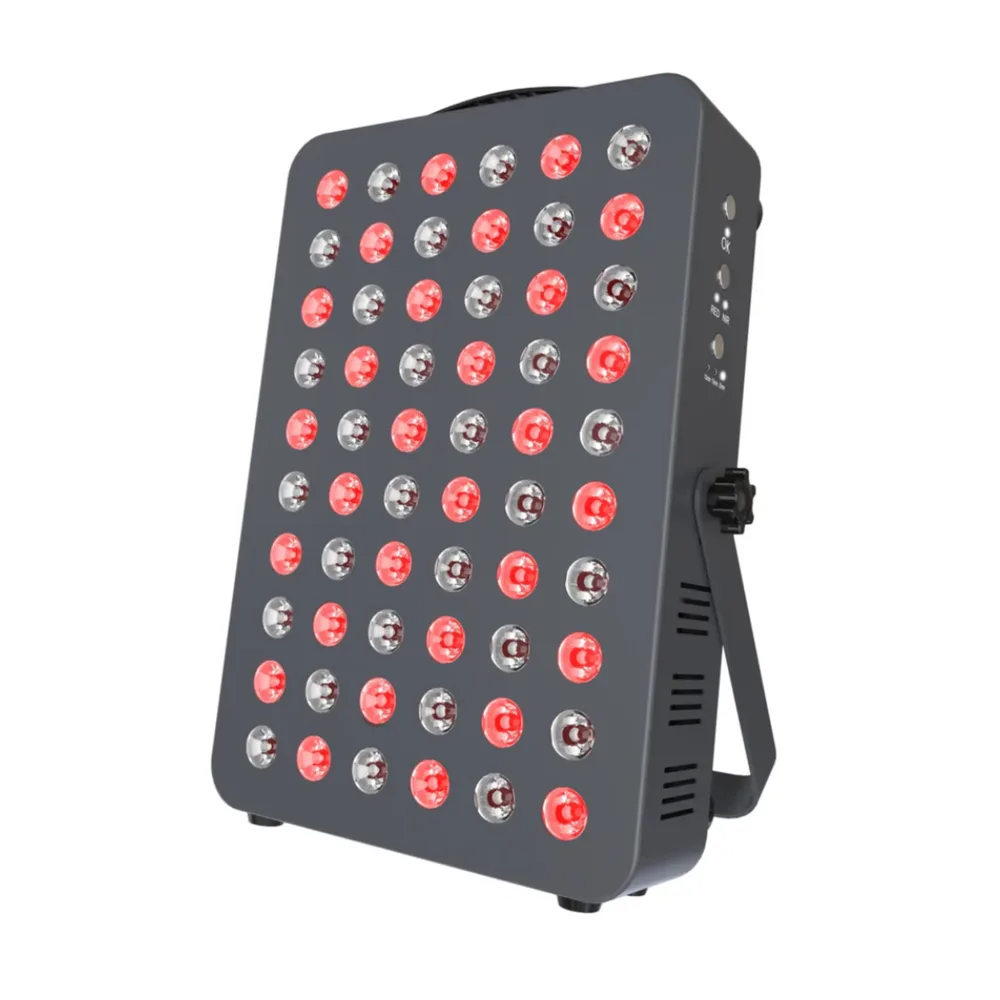
Every red light panel listing leads with an irradiance number, usually something impressive in mW/cm², and that number is the closest thing this category has to a horsepower figure. It is also the spec most bent by how it gets measured. The same panel can honestly carry a figure above 155 or above 70 depending on which meter the manufacturer picked up, and a claim measured at 3 inches can look far stronger than identical hardware measured at 6. None of this requires anyone to lie. It only requires choosing flattering conditions and skipping the footnotes. This guide covers what the number means, the two levers that inflate it, what independent testers find when they bring their own meters, and how to compare panels on equal terms.
What the number is supposed to mean
Irradiance in mW/cm² describes power density: how many milliwatts of light land on each square centimeter of a surface at a given distance from the panel. Three things determine the figure a brand prints. The panel’s actual output is one. Distance between the meter and the LEDs is the second, since light spreads and weakens fast as you back away. The meter itself is the third, because consumer solar-power meters and lab-grade instruments read the same light very differently. Only the first is a property of the product. The other two are choices, and no standard forces brands to make the same ones.
One panel, two honest numbers
Mito Red Light does something almost no competitor does: it publishes two irradiance figures for the same MitoMAX 2.0 panel, both at 6 inches. A consumer solar-power meter reads above 155 mW/cm². Lab-grade measurement reads above 70. Same panel, same distance, and the meter choice alone roughly doubles the headline. Mito deserves credit for printing both, because most brands publish only the larger style of number without saying which instrument produced it. The lesson travels well beyond one brand: a panel claiming 150-plus and a panel claiming 70-plus may be describing near-identical hardware through different instruments.
Distance moves the number just as much
Move a meter from 6 inches to 3 and the reading climbs sharply, which is why the fine print matters. Bestqool specifies the BQ60’s 95.6 mW/cm² at 3 inches, half the distance most rivals quote, so that figure cannot sit next to a 6-inch rating without adjustment. Megelin goes a step further into the fog and claims 200 mW/cm² for its TruWellness tower without stating any measurement distance on the product page. A number with no distance attached is not a spec. It is a decoration, and the fair response is to leave it out of your comparison entirely.
What independent meters keep finding
When reviewers bring their own instruments, readings land below the marketing almost every time. Light Therapy Insiders measured the Hooga HG300 at roughly 55 mW/cm² against Hooga’s claim of 73 at 6 inches, then still rated the panel a strong value at its price, which tells you a below-claim reading is the expected correction rather than a scandal. GembaRed’s instrumented review of a budget Wolezek bulb found more to worry about: intensity below the advertised figure, high flicker, and electric-field EMF over 1000 V/m up close, though the EMF fell to near zero at 6 inches.
Here is how claims and independent readings line up across panels we track:
| Panel | Maker’s claim | Stated distance | Independent reading |
|---|---|---|---|
| Hooga HG300 | 73 mW/cm² (100+ at surface) | 6 inches | ~55 mW/cm² (Light Therapy Insiders) |
| Bestqool BQ60 | 95.6 mW/cm² | 3 inches | None found |
| Mito MitoMAX 2.0 | >155 consumer meter / >70 lab-grade | 6 inches | Maker publishes both figures itself |
| Megelin T1000 | 200 mW/cm² | Not stated | None found |
The specs listings never show
Instrumented reviews surface two measurements that never appear on product pages. Flicker is one: Light Therapy Insiders recorded the HG300’s LEDs cycling at about 100 Hz, a figure no listing volunteers. EMF is the other, and the Wolezek bulb test shows why distance matters there too, with readings that ran high against the housing and near zero at 6 inches. Neither number will appear in an Amazon spec table. Both exist only because someone independent pointed an instrument at the hardware, which is a strong argument for favoring panels that have been through at least one such review.
Comparing panels on equal terms
A workable method comes down to four habits. Compare only figures quoted at the same distance, and discard claims that state no distance at all. Prefer brands that name their instrument, treating a lab-grade figure as the honest baseline and reading consumer-meter numbers as roughly double-counted. Give real weight to any panel with an independent instrumented review on record, since the pattern says measured output runs below claimed output. Then let the warranty break ties, because coverage varies more than the hardware does: Megelin backs its towers for 1 year, Bestqool and Mito Red Light for 2, and Hooga for 3 years with a 60-day trial on top.
The wavelengths themselves will rarely decide anything, since 660nm red paired with 850nm near-infrared is the standard combination across Hooga, Bestqool, Wolezek, Megelin, and Mito alike. With the light itself commoditized, the honest differentiators are the measurement behind the number, the paperwork behind the panel, and the years of coverage behind the purchase. Grand View Research pegs this market at $533.8 million in 2025, projecting $1,133.1 million by 2033, so expect more brands and bigger numbers every year. The meters, thankfully, do not care about marketing.
Questions, answered once
Why does the same panel show two different irradiance numbers?
Meter choice. Mito Red Light publishes both a consumer solar-meter reading above 155 mW/cm² and a lab-grade reading above 70 for the same MitoMAX 2.0 panel at the same 6 inches. The instrument alone roughly doubles the headline figure.
What measurement distance should an irradiance claim state?
Six inches is the most common convention among major panel brands. A 3-inch figure, like Bestqool's BQ60 rating, reads higher than the same panel would show at 6 inches, and a claim with no stated distance, like Megelin's, cannot be compared to anything.
Do independent tests usually match manufacturer irradiance claims?
They usually come in lower. Light Therapy Insiders measured about 55 mW/cm² from the Hooga HG300 against a 73 claim, and GembaRed measured a Wolezek bulb below its advertised intensity. Build comparisons around measured numbers wherever they exist.
What is LED flicker on a red light panel?
Flicker is rapid cycling in LED output that only shows up under instruments. Light Therapy Insiders recorded roughly 100 Hz flicker on the Hooga HG300. No product listing we reviewed publishes a flicker figure, so instrumented third-party reviews are the only place to find one.