Hooga HG300 red light panel review
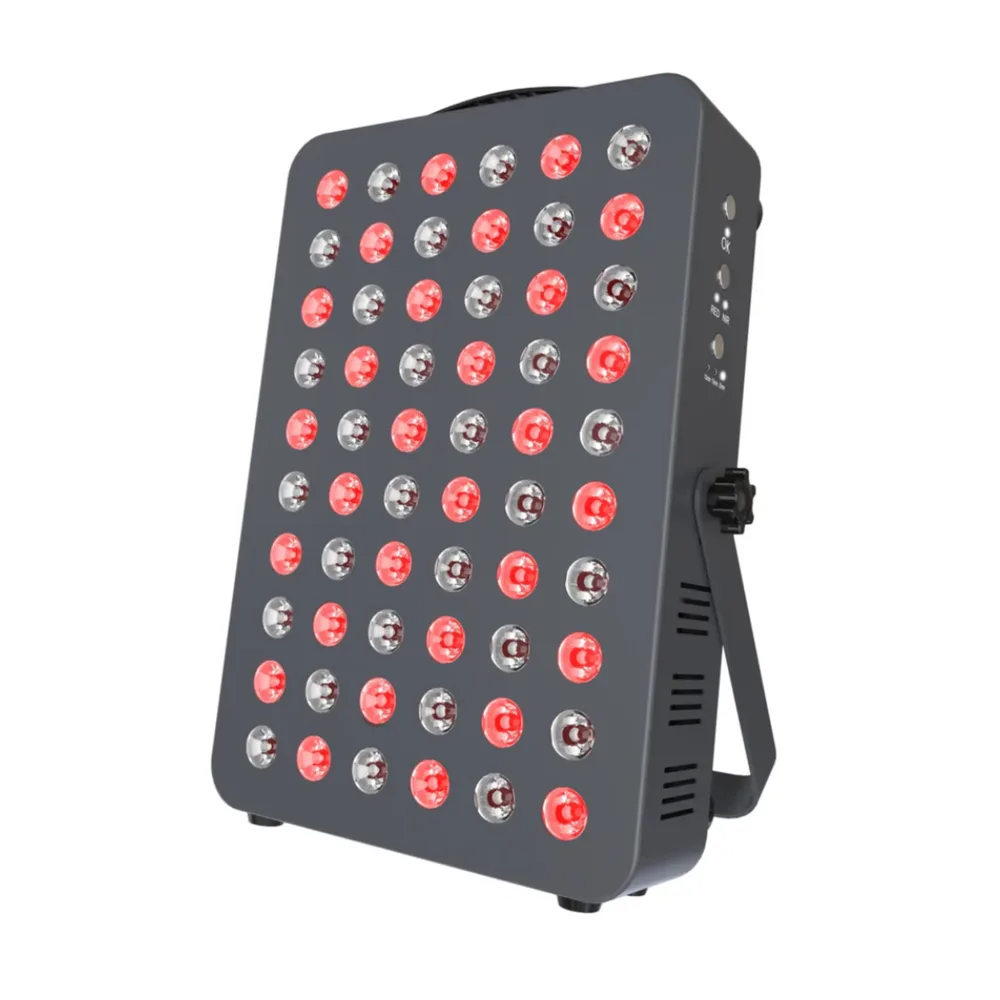
Hooga’s HG300 has spent years as the panel reviewers point first-time buyers toward, and the hardware explains the reputation. Sixty single-chip 5W LEDs split between 660nm red and 850nm near-infrared sit in a 6-pound metal housing with a built-in timer, a swing-out kickstand, and a cooling fan, at a list price in the under-$200 band. Rarer still for this category, an independent outlet has put a meter on this exact model, so you can weigh Hooga’s output claim against a real measurement. The two numbers disagree, and we will get to that, but the gap still leaves the HG300 looking strong for the money.
What the buyer is getting
This is a tabletop panel, 12.2 by 8.2 inches across the face and 2.5 inches deep. The LED array uses the same two-wavelength pair as nearly every widely sold panel from Bestqool, Wolezek, Mito Red Light, and Megelin, which makes cross-shopping straightforward: you compare output, build, and warranty rather than exotic wavelength menus. Hooga classes it as a 300W device by LED rating, though actual draw from the wall is 80W, well within any household outlet.
Controls stay minimal by design. A built-in timer ends sessions on schedule, the kickstand props the panel on a desk or bench, and a small fan keeps the LEDs cool. In the box you get a three-prong power cord, protective goggles, and a manual. Wear the goggles; the array is intensely bright at close range. Coverage matches the physical size, meaning one body region at a time, a face or a shoulder or a knee from several inches away, not a torso-wide wash of light.
The warranty deserves its own paragraph. Hooga backs the HG300 for 3 years and adds a 60-day trial period. Bestqool and Mito Red Light offer 2 years on competing panels and Megelin offers 1, so the cheapest panel in this comparison carries the longest coverage in it.
Where it earns its money
Measured output is the headline. Light Therapy Insiders put the HG300 on a meter and recorded roughly 55 mW/cm2 at 6 inches, a strong number for this price band, and the same instrumented review found low EMF at normal use distance. Independent figures matter here because most brands publish only their own readings, often taken on consumer solar meters that flatter the result. Mito Red Light, to its credit, publishes both kinds of numbers for its MitoMAX 2.0, over 155 mW/cm2 on a consumer meter and over 70 on lab-grade equipment at the same distance, which shows how much the meter alone can move a headline figure. A third-party confirmation that the HG300 delivers serious output, even if less than advertised, beats a bigger unverified claim.
Daily use is the other win. Six pounds and a kickstand mean the panel migrates from desk to nightstand to garage bench without ceremony, and owners describe the fan as quiet enough to forget. There is one cord, one timer, and nothing to pair or update. Amazon reviewers keep returning to the same themes: compact, quiet, easy to run.
Where it falls short
Start with the claim gap. Hooga rates the panel at 73 mW/cm2 at 6 inches and over 100 mW/cm2 at the surface, while the independent measurement landed around 55. The tested figure still leads its price band, but treat Hooga’s published intensity as optimistic, a discount worth applying across this entire industry.
The same review measured the LEDs flickering at about 100 Hz, a rate the eye does not normally register but one that shows up on instruments, and a spec that fussier buyers track. Feature count is the other gap. The spec sheet lists a timer and a kickstand and stops there, with no dimming, pulse mode, or independent switching between the red and near-infrared channels. Budget rivals like the Wolezek controller and premium Mito panels each offer some of those controls, and Hooga’s own ULTRA360 line steps up to four wavelengths with adjustable brightness for buyers who want them. One quirk to expect on any panel with this wavelength pair: 850nm light is invisible, so half the array looks unlit whenever near-infrared is running. The panel is fine. Every brand fields confused reviews about it anyway.
Who it fits
Buy the HG300 as a first panel if measured output per dollar is your priority and you can live with a timer as the entire control scheme. It suits desk and tabletop use on one body region per session, and the 60-day trial stacked on a 3-year warranty makes it the lowest-risk purchase in the category.
Skip it if you want half-body coverage in a single position, which is 36-inch tower territory at several times the weight and cost, or if you want mode switching, dimming, or pulse features, which live one shelf up. Anyone allergic to spec-sheet optimism should also note the output gap, though the honest read is that the HG300 under-delivers its claim while out-delivering its price band.
See it move
vertical demo of a woman sitting in front of the glowing HG300 panel on its kickstand, lighting her face in a dark room. Manufacturer video, self-hosted. Sourced August 19, 2026.
The spec sheet
| Wavelengths | 660nm red + 850nm near-infrared |
|---|---|
| LEDs | 60 single-chip 5W LEDs |
| Irradiance | Claimed 73 mW/cm2 at 6 in (100+ at surface); ~55 mW/cm2 measured by Light Therapy Insiders |
| Power draw | 80W actual (300W LED class) |
| Size / weight | 12.2 x 8.2 x 2.5 in, 6 lbs |
| Timer / stand | Built-in timer; swing-out kickstand for tabletop use |
| Cooling | Quiet cooling fan |
| Included | 3-prong power cord, protective goggles, manual |
| Warranty | 3 years plus a 60-day trial period (hoogahealth.com) |
- Independently measured at about 55 mW/cm2 at 6 inches
- Compact 6 lb build with kickstand, timer, and quiet fan
- 3-year warranty plus a 60-day trial, longest in its class
- Low EMF at normal use distance per independent testing
- Measured output runs well below the 73 mW/cm2 claim
- LEDs flicker at roughly 100 Hz per instrumented testing
- No dimming, pulse mode, or separate red/NIR switching
- Small panel covers one body region per session
The benchmark entry panel, still
The HG300 stays the default first panel for a reason: independently confirmed output near the top of its price band, a 3-year warranty with a 60-day trial, and nothing on the spec sheet you pay for but never use. First-time buyers and desk-side users should buy it with confidence. Shoppers who want half-body coverage should put the money toward a 36-inch tower instead, and anyone who wants dimming, pulse modes, or four-wavelength control should look at Hooga's ULTRA360 line or a premium brand.
Hooga questions, answered once
How does the Hooga HG300's measured output compare to its rating?
Hooga rates it at 73 mW/cm2 at 6 inches, while Light Therapy Insiders measured about 55 mW/cm2 at the same distance. That falls below the claim but still ranks strong against similarly priced panels, most of which have no independent measurements at all.
What comes in the box with the HG300?
The panel ships with a three-prong power cord, protective goggles, and a manual. A kickstand and a session timer are built into the unit itself, so there is nothing extra to buy for tabletop use.
Why do half the HG300's LEDs look off during a session?
The 850nm near-infrared LEDs emit light the eye cannot see, so they appear unlit while running. Every panel using the 660nm plus 850nm pair behaves the same way, and it is the most common false alarm in owner reviews.
What warranty does Hooga offer on the HG300?
Hooga covers the panel for 3 years and adds a 60-day trial period. That is the longest coverage among its direct rivals, which run 1 to 2 years.